Art history timeline atlas
Contemporary African Networks And Afrofuturism
Contemporary African and diaspora artists work through migration, material reuse, futurity, memory, fashion, photography and global exhibition networks.
Networked, Public And Planetary Art
Historical context
This field cannot be reduced to one style or continent. Artists move through Lagos, Accra, Johannesburg, Nairobi, London, New York, Dakar and biennial circuits.
Afrofuturism uses speculative futures and histories of the African diaspora. It overlaps with parts of contemporary African practice but is not a label for every African or diaspora artist, nor for every work shown here.
How to look
- Identify reused materials in a documented El Anatsui work and check the artist's account of their history.
- Compare a specifically identified Afrofuturist work; explain its speculative element rather than applying the label to all African art.
Makers, works, and materials
Date range: c. 1990-today
Regions: Africa, Global, African diaspora
Media: Installation, Photography, Video, Textile, Digital media
Movements: Contemporary African art, Afrofuturism, Global contemporary art
Makers to research
- El Anatsui
- Wangechi Mutu
- Yinka Shonibare
- Zanele Muholi
- Kehinde Wiley
Named works to compare
- El Anatsui, Dusasa II
- Wangechi Mutu, The End of eating Everything, 2013
A future built from fragments
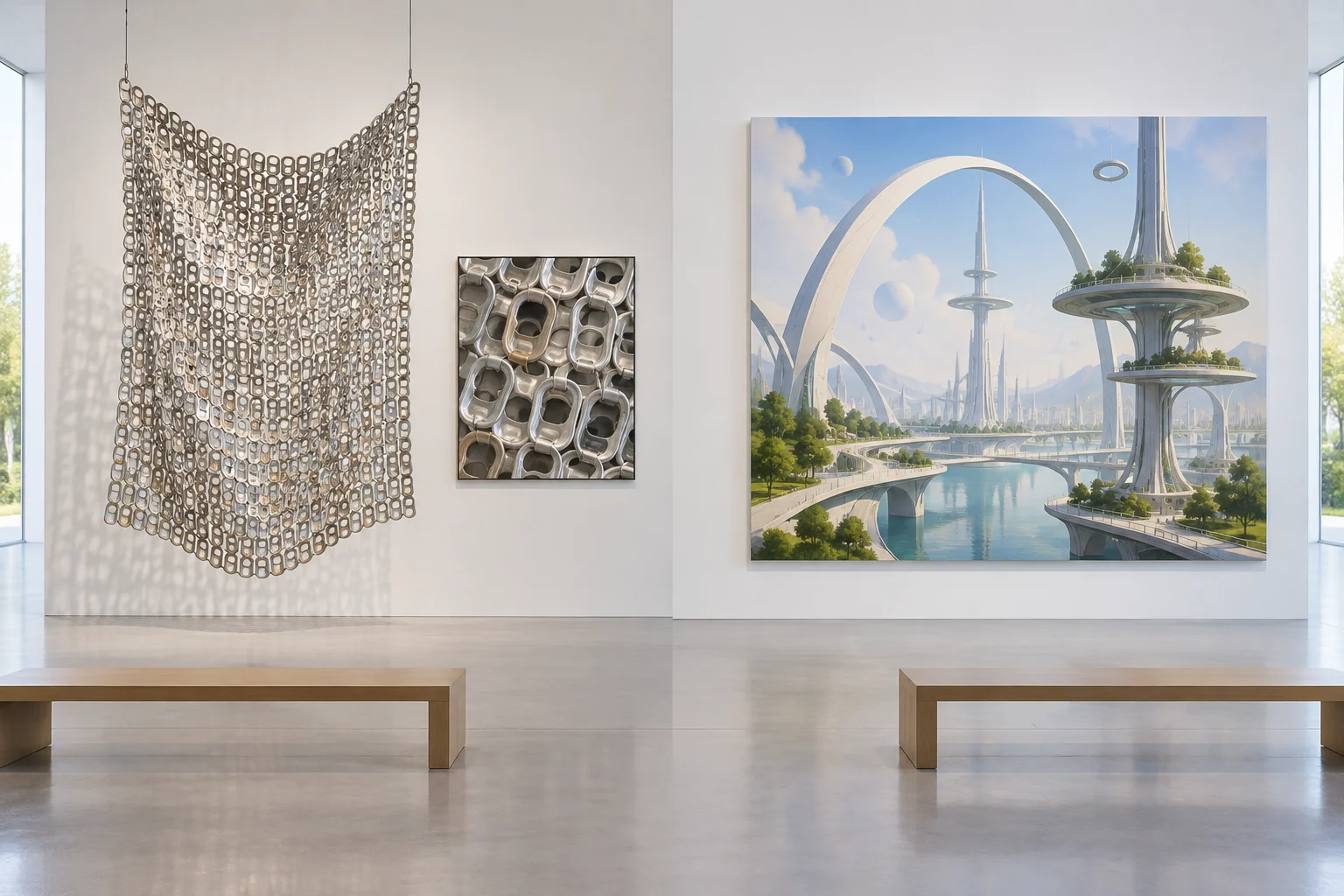
A work made from bottle caps, textiles, photographs or digital fragments can speak about trade, waste, memory and futures at the same time.
Legacy and why it matters
This entry gives the contemporary atlas stronger African agency and shows how global art is made through networks, not only Western institutions.
Read material and future separately
Historical distinction: Contemporary African art, diaspora practice and Afrofuturism overlap but are not synonyms.
Worked example: El Anatsui, Dusasa II
Observe
Small joined pieces produce a flexible surface whose folds resemble cloth at a distance.
Interpret
Material reuse and collective assembly connect everyday objects with a monumental form.
Check the evidence
The catalogue records specific materials and working context. A speculative future belongs to the separate comparison below, not automatically to every contemporary African work.