Art history timeline atlas
Byzantine Icons And Mosaics
Byzantine art used gold, frontal presence and sacred repetition to make images feel less like windows onto the world than thresholds to devotion.
Sacred, Courtly And Manuscript Worlds
Historical context
Icons and mosaics mattered so intensely that their use caused theological conflict. The icon was not merely a picture; it was a focus for prayer and a claim about incarnation.
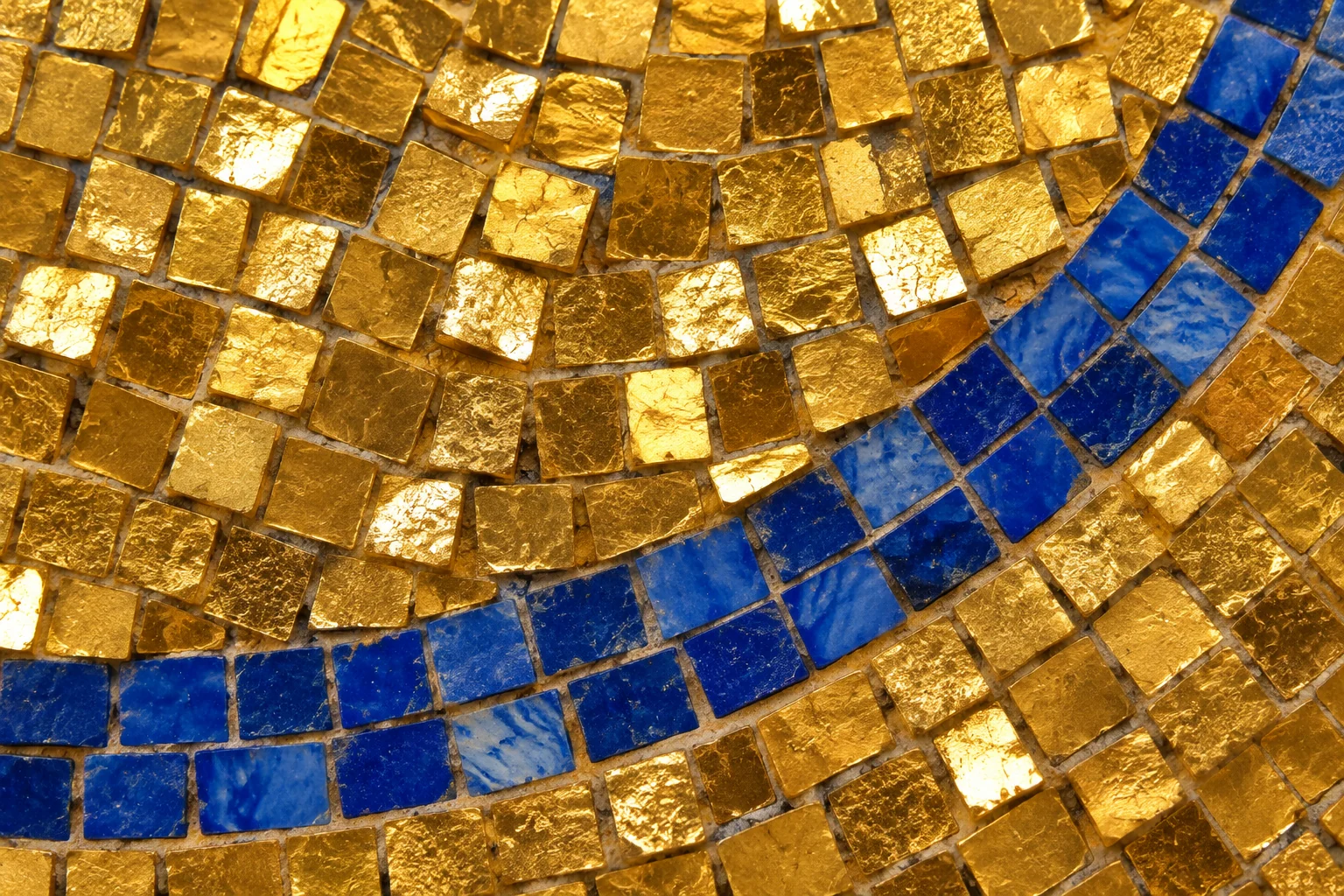
Mosaic surfaces change with light and movement, making sacred space shimmer rather than sit still.
How to look
- Locate small changes in the angle or tone of gold tesserae in a documented mosaic detail.
- Compare an icon panel and an architectural mosaic: how do scale, viewing distance and illumination differ?
Makers, works, and materials
Date range: c. 500-1453
Regions: Europe, West Asia
Media: Mosaic, Icon, Gold, Architecture
Movements: Byzantine art
Makers to research
- Unknown icon painters and mosaicists
Named works to compare
- Mosaics of San Vitale, Ravenna
When images became a crisis
Iconoclasm was not a quarrel about decoration. It was a fight over whether matter could carry sacred presence.
Legacy and why it matters
Byzantine image theory shaped Orthodox Christian art and later debates about image, presence, aura and reproduction.
Light across tesserae
Historical distinction: A screen image cannot reproduce changing reflected light or establish how worshippers experienced the work.
Worked example: Mosaics of San Vitale, Ravenna
Observe
Gold backgrounds and colored figures occupy an interior whose illumination changes with position.
Interpret
Mosaic is a surface of separate reflecting pieces; a flat screen image suppresses that changing light.
Check the evidence
Distinguish the early mosaics from the much later decoration of the central vault described in the site record.