Art history timeline atlas
Neoclassicism And Enlightenment
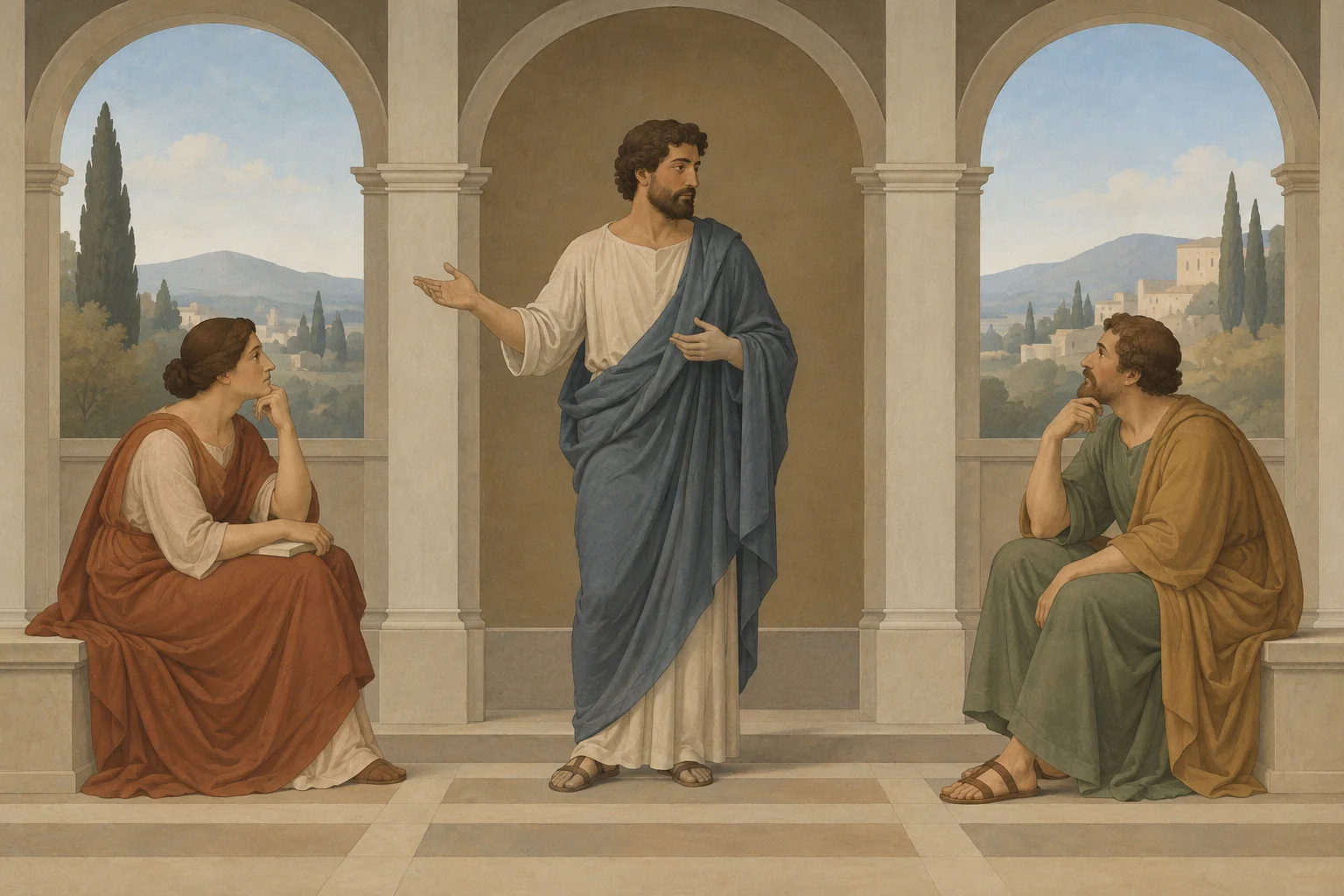
Neoclassicism revived ancient forms to argue for reason, virtue, revolution, empire and moral seriousness. Explore its context, materials, regions,...
Empires, Markets And Global Exchange
Historical context
Archaeological discoveries, Enlightenment thought and political revolution made antiquity newly useful. Classical form could serve democracy, monarchy or empire depending on the patron.
Neoclassicism simplified the surface after Rococo, but its politics were rarely simple.
How to look
- Compare gestures and figure groups in David's Oath of the Horatii.
- Read the commission date and patron alongside later political interpretations.
Makers, works, and materials
Date range: c. 1750-1830
Regions: Europe, Americas
Media: Painting, Sculpture, Architecture, Print
Movements: Neoclassicism
Makers to research
- Jacques-Louis David
- Angelica Kauffman
- Antonio Canova
Named works to compare
- Jacques-Louis David, The Oath of the Horatii
Ancient Rome as modern propaganda
A painting of Roman virtue could become a modern political tool. The past was not merely studied; it was mobilized.
Legacy and why it matters
Neoclassical forms still shape museums, courthouses, memorials and the visual language of state authority.
Pose a public argument
Historical distinction: An antique subject does not make a work inherently democratic; classical forms served conflicting political projects.
Worked example: Jacques-Louis David, The Oath of the Horatii
Observe
Extended arms, swords and upright bodies contrast with the curved, seated group at the side.
Interpret
Opposed figure groups turn posture into a public argument about duty and its human costs.
Check the evidence
The Louvre documents a commission for Louis XVI. Later revolutionary readings are not the same as the original commission.